.jpg)
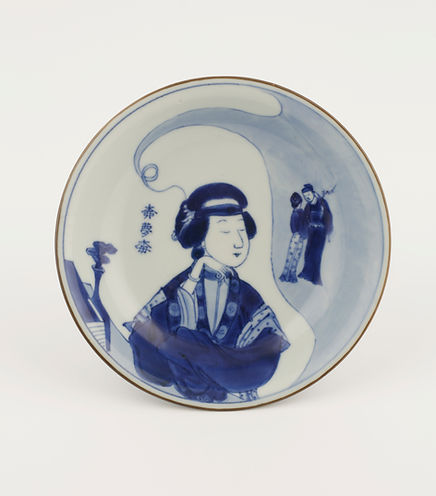
A grand plan to create the world‘s finest collection of 17-century Chinese porcelain was not in Sir Michael Butler‘s mind when he bought his first piece of porcelain in 1961. However, the apparent lack of research into this period intrigued him and since he found the pieces more beautiful and affordable than those of the 16th and 18th centuries, he started to collect zealously. This lecture will chart the development of Sir Michael’s collection as he became increasingly scholarly and interested in refining the chronology of the 17th-century porcelain while championing it as one of China’s most important periods of ceramic creativity. He organised and co-curated six exhibitions, most importantly in 2005 in the Shanghai Museum. By the turn of the 21st century, he began to be extremely concerned by the quantity of forgeries appearing on the market and yearned for a time when science could prove or disprove a piece’s authenticity. Following his death in 2013, his daughter Katharine has continued collecting and has embarked on projects of scientific analysis and digital categorisation. In this lecture, she will discuss the progress of these endeavours and consider how collecting porcelain in the future will be affected by a scientific approach.

Katharine Butler is an entrepreneur as well as a collector and researcher in Chinese porcelain. She has a MA in History of Art from Edinburgh University. From 1992 – 2017, she founded, ran and then sold companies in the consumer goods sector in the Czech Republic. She is co-author of Leaping the Dragon Gate: The Sir Michael Butler Collection of Seventeenth-Century Chinese Porcelain, (2021) and has lectured widely and has published articles in Arts of Asia, TOCS and recently the Journal of the Society of International Ceramic Specialists of which she is a founder member. She is a Council Member of the Oriental Arts Society in London. From 2025, she has been working on a new start-up providing AI services to the world of art and culture as well as co-supervising a PhD student at Cranfield University working on a forensic research project into 17th and 18th century Chinese Porcelain.
.jpg)